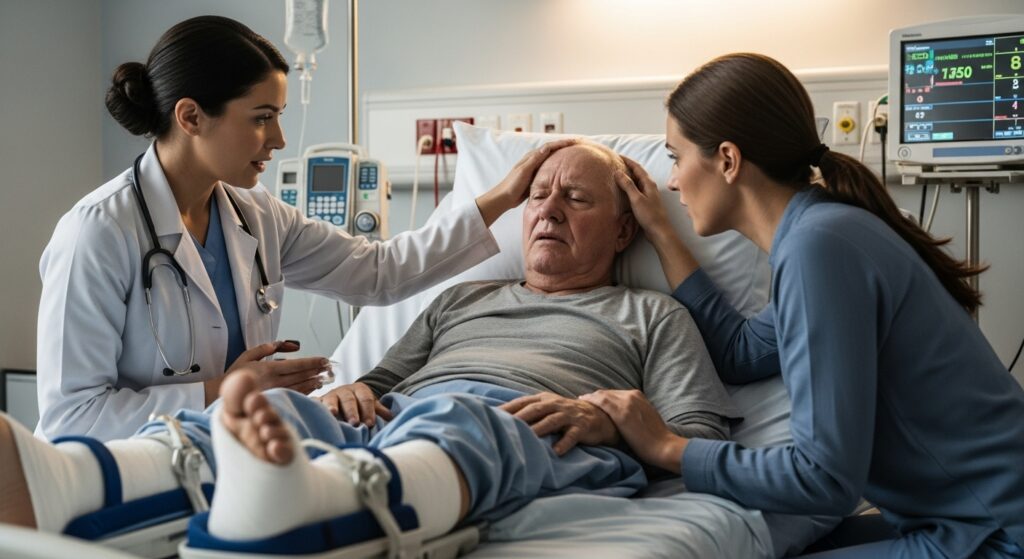
Watching a loved one with dementia experience a fall and break a hip is a frightening and heartbreaking event. In this moment, your mind is likely filled with urgent questions. “How serious is this?” and “What happens now?” are often at the top of the list.
This article is here to help you navigate this difficult time. We will provide clear, compassionate, and factual information about what to expect when a dementia patient breaks a hip. We will cover life expectancy, the reasons this injury is so serious, and the key factors that affect recovery. Most importantly, we will offer practical advice on how you, as a caregiver, can provide the best possible support for your loved one’s comfort and dignity.
Understanding the Link: Why Dementia Patients Are at High Risk for Hip Fractures
To understand the recovery, it’s important to first understand why falls and hip fractures are so common in people with dementia.
- Balance and Coordination Problems: Dementia can affect parts of the brain that control walking and balance, making a person unsteady on their feet.
- Poor Judgment and Vision: They might misjudge distances, not see a step, or try to get out of bed without asking for help.
- Medication Side Effects: Some medications can cause dizziness or low blood pressure, increasing the risk of a fall.
- Bone Weakness: Many older adults, especially those who may not eat a balanced diet or get enough sunlight, have weaker bones (osteoporosis) that break more easily.
Because of these factors, a person with dementia is at a much higher risk of taking a serious fall.
Why a Broken Hip Is Especially Dangerous for Dementia Patients
A hip fracture is a major injury for any older adult, but for a person with dementia, the risks are significantly higher. The problem isn’t just the broken bone itself; it’s the cascade of complications that can follow.
- The Trauma of Hospitalization: A hospital is a confusing and scary place. For a person with dementia, the unfamiliar faces, noises, and routines can lead to severe anxiety, agitation, and confusion—a state sometimes called “hospital delirium.” This can make it very hard for them to rest and heal.
- Difficulty with Rehabilitation: Recovery from a hip fracture requires physical therapy. A patient needs to be able to understand and follow instructions like, “Try to stand on your left leg,” or “Take a deep breath.” Cognitive impairment can make this nearly impossible, slowing recovery dramatically.
- Serious Medical Complications: Being stuck in bed leads to high risks of:
- Pneumonia: Lying down makes it hard to fully expand the lungs.
- Blood Clots: Lack of movement can cause clots to form in the legs.
- Pressure Sores (Bedsores): Constant pressure on the same skin areas can cause painful, open wounds.
- Infections: This includes urinary tract infections from catheters or wound infections from surgery.
The combination of the physical injury and the cognitive challenges creates a perfect storm that is difficult to weather. For more on the emotional toll this takes, see our article on the mental strain on caregivers.
Life Expectancy After a Hip Fracture: What the Research Shows
This is the question everyone asks, and it requires a honest, compassionate answer. It’s important to remember that every person is unique, and statistics are averages, not predictions for your loved one.
- For any older adult over 70, a hip fracture is a serious event. Studies show that about 20-30% of elderly hip fracture patients die within one year of their injury.
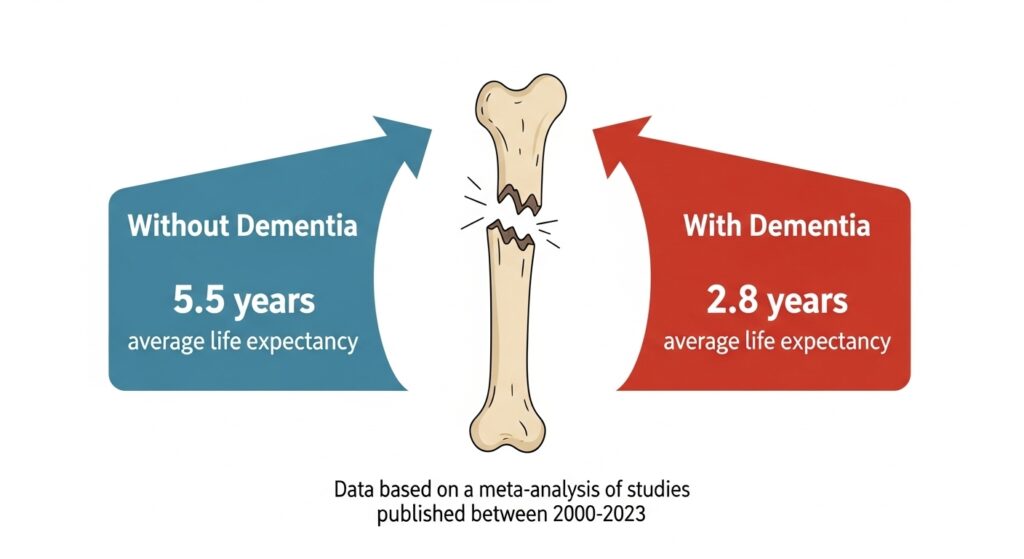
- For patients who also have dementia, the risk is much higher. Research indicates that the mortality risk for dementia patients after a hip fracture is roughly double that of cognitively healthy patients.
- One large study found that over half of dementia patients who broke a hip did not survive beyond six months.
These numbers can feel shocking and scary. However, they do not mean that recovery is impossible. They highlight why excellent, focused care is so critical. Some patients, especially those in the earlier stages of dementia, can recover significant function with strong support.
Key Factors That Affect Life Expectancy and Recovery
Several key factors will influence your loved one’s journey after a hip fracture.
A. The Stage and Severity of Dementia
This is often the most important factor. A person in the early stages of dementia may still be able to participate in therapy and understand what is happening. A person with advanced dementia, who may already be bedbound or unable to communicate, has a much harder time recovering from such a major physical stress. Their body may simply not have the reserves to heal.
B. Overall Health and Other Medical Conditions
The presence of other health issues like heart disease, diabetes, chronic lung disease, or kidney problems greatly increases the risk of complications after surgery and anesthesia. Good nutrition and hydration before and after the injury also play a huge role in healing.
C. The Type of Fracture and Treatment
Doctors will decide if surgery is the best option. Surgery can allow for earlier movement, which helps prevent complications. However, surgery itself is a major stress on the body. For some very frail patients with advanced dementia, non-surgical comfort-focused care may be recommended to manage pain and avoid the trauma of an operation.
D. Post-Fracture Mobility and Rehabilitation
This is a crucial factor. Patients who can get out of bed and start moving—even just sitting in a chair—have a much better chance of survival and a higher quality of life. Consistent physical and occupational therapy is vital. For tips on creating a stable environment for recovery, read about establishing routines for care.
Palliative and Hospice Care: A Path to Comfort
When the goal shifts from “cure” to “comfort,” palliative and hospice care become incredibly important options.
- Palliative Care is specialized medical care focused on providing relief from the pain and symptoms of a serious illness. It can be provided at any stage of an illness and can happen at the same time as curative treatment.
- Hospice Care is a type of palliative care for people who are believed to be in the last six months of life. The focus is entirely on comfort, dignity, and quality of life, not on further surgeries or aggressive treatments.
Choosing hospice does not mean “giving up.” It means choosing to focus on peace, pain management, and emotional support for both the patient and the family.
How Caregivers Can Help After a Hip Fracture: A Practical Guide
As a caregiver, your role is more important than ever. Here’s how you can help.
Support Physical Healing
- Encourage Gentle Movement: Work with the therapists to learn simple, safe exercises you can help with.
- Manage Pain: Be your loved one’s advocate. They may not be able to say they are in pain, so watch for signs like grimacing, restlessness, or crying out. Ensure they get their pain medication on time.
- Focus on Nutrition: Healing requires protein and calories. Offer small, nutrient-dense meals and encourage fluids. We have ideas for easy meals for dementia patients that can help.
Provide Emotional and Cognitive Support
- Be a Calm Presence: Your familiar face is a powerful tool against confusion and fear.
- Use Clear Communication: Speak slowly, use short sentences, and offer reassurance. Our guide on how to talk to someone with dementia offers great tips that apply in person, too.
- Maintain Routines: Keep their daily schedule as normal as possible. This provides a sense of security.
Prevent Future Falls
Once your loved one is mobile again, take steps to make their environment safer.
- Remove throw rugs and clutter.
- Improve lighting in hallways and bathrooms.
- Install grab bars in the shower and next to the toilet.
- Ensure their shoes are sturdy and well-fitting.
Monitor for Signs of Complications
Be watchful for signs that something is wrong, and don’t hesitate to call a doctor. Watch for:
- Fever (sign of infection)
- Redness, swelling, or drainage from the surgical wound
- Coughing or difficulty breathing (sign of pneumonia)
- Swelling, redness, or pain in the calf (sign of a blood clot)
- Loss of appetite or not drinking
Emotional and Ethical Considerations for Caregivers
This journey can bring up difficult emotions. You may feel guilt about the fall, or feel overwhelmed by difficult medical decisions. It is normal to feel conflicted about whether to pursue surgery or to choose comfort care.
Remember that the goal is always your loved one’s well-being. In advanced dementia, quality of life often becomes more important than length of life. Making a choice for comfort and dignity is an act of profound love. Please know you are not alone. Consider joining a support group for navigating dementia to connect with others who understand.
Key Takeaways
- A hip fracture is a very serious injury for a person with dementia, significantly impacting life expectancy.
- The high risk is due to a combination of the physical injury and complications like pneumonia, made worse by the challenges of dementia.
- The stage of dementia, overall health, and ability to participate in rehab are the biggest factors in recovery.
- Your care as a caregiver is vital. Your advocacy, emotional support, and practical help can greatly influence your loved one’s comfort and quality of life.
- Palliative and hospice care are valuable resources focused on comfort and dignity, not on giving up.
Frequently Asked Questions (FAQs)
1. How long can a dementia patient live after hip surgery?
Life expectancy varies widely. While statistics show a high risk within the first six months to a year, some patients may live for several years, especially if they are in the early stages of dementia, are otherwise healthy, and respond well to rehabilitation. The surgery addresses the fracture, but the underlying challenges of dementia and aging remain.
2. Is surgery worth it for advanced dementia patients?
This is a deeply personal and difficult decision that families must make with the medical team. For a patient who is no longer walking, is having frequent infections, and has severe cognitive impairment, surgery may add more trauma than benefit. In these cases, a non-surgical, comfort-focused approach (hospice care) may be the kindest option to manage pain and allow for a peaceful passing.
3. Can dementia patients recover mobility after a hip fracture?
It is possible, but often they do not return to their pre-fracture level of mobility. Many will need to use a walker or wheelchair permanently. For patients with advanced dementia, recovering the ability to walk is less likely. The focus should be on safe mobility, even if that means just being able to sit in a chair or transfer to the toilet with help.
4. What are the signs of decline after a hip fracture?
Signs that a patient may be entering the final stages of life include:
- Loss of appetite and refusing fluids.
- Sleeping much more and being difficult to wake.
- Becoming less communicative and withdrawing.
- Changes in breathing patterns (shallow breaths or pauses).
- Increased confusion or agitation.
5. When should hospice care be considered?
Hospice should be discussed when:
- The patient is no longer seeking curative treatment for the fracture or other conditions.
- They have had multiple hospitalizations or infections.
- Their physical and cognitive function has significantly declined.
- The focus shifts entirely to comfort, pain management, and quality of life. A doctor must certify that the patient is likely within six months of the end of life to qualify for hospice services.