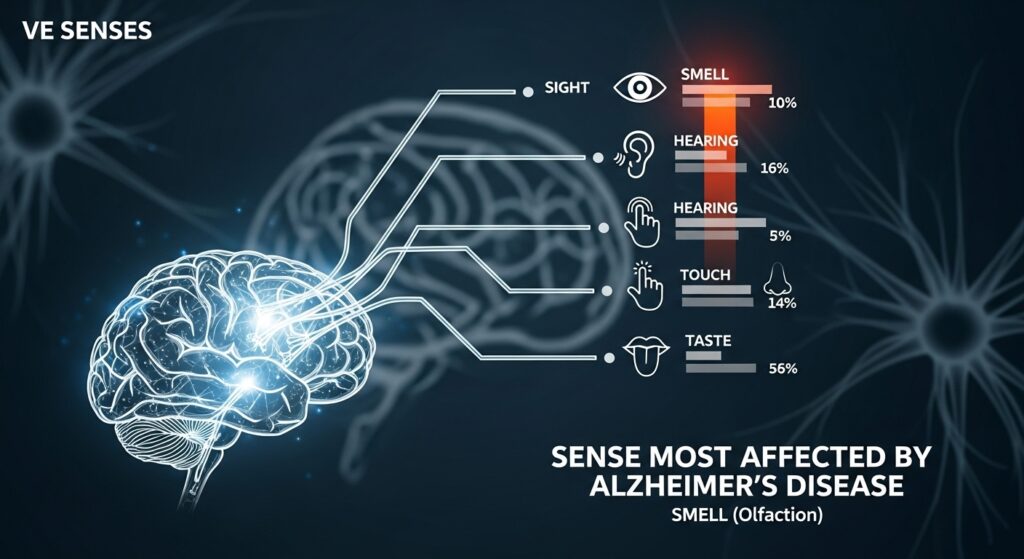
Smell is one of the senses most often studied for early changes associated with Alzheimer’s disease. Some people have more difficulty identifying familiar odors before their memory problems become obvious. But no single sense is always affected first or most severely. Vision, hearing, taste, and temperature sensitivity can also change, and the pattern differs from person to person. A change in smell alone cannot diagnose Alzheimer’s. National Institute on Aging
For a caregiver, the most useful question is often practical: What has changed for this person, and is it affecting their comfort or safety?
Why Smell Gets So Much Attention
Researchers have found an association between declining smell identification and Alzheimer’s related changes in the brain. That makes smell an area of interest in early detection research. It does not mean that someone who cannot smell coffee or recognize another familiar scent has Alzheimer’s disease. Smell can change for many reasons, and a clinician needs to consider the person’s full health history and symptoms. National Institute on Aging
A reduced sense of smell can matter even when its cause is unrelated to dementia. Someone may have trouble noticing spoiled food, smoke, or other warning odors. If you notice a persistent change, tell their healthcare professional and review home safety measures. National Institute on Aging
How Alzheimer’s and Other Conditions Can Affect the Senses
Smell and Taste
A person may stop noticing familiar odors or say that meals seem bland. Smell shapes how food is experienced so that changes may affect appetite. But changes in eating can have many causes. If your loved one is eating less, losing weight, or having trouble swallowing, discuss it with their healthcare team rather than assuming sensory loss is the cause. National Institute on Aging
At home, check food freshness yourself instead of relying on your loved one to detect spoilage. Keep smoke and carbon monoxide alarms working, and review kitchen safety as their abilities change. Alzheimer’s Association
Vision and Visual Processing
Sometimes the difficulty is not simply poor eyesight. A person living with Alzheimer’s may have more trouble making sense of what they see, including contrast, depth, or objects in a busy setting. That can make a dark floor mat look confusing or a poorly lit staircase harder to navigate. Eye conditions and an outdated glasses prescription can worsen the problem, so an eye exam remains valuable. Alzheimer’s Association
Try clear lighting without harsh glare, remove tripping hazards, and use contrast to make important objects easier to find. Notice which changes help your loved one; an adjustment that works in one home may be distracting in another. Alzheimer’s Association
Hearing and Understanding Speech
If your loved one repeatedly asks you to speak again, several things may be happening. They may have hearing loss, find background noise distracting, or have difficulty processing spoken information. Avoid assuming that every communication problem comes from Alzheimer’s. Hearing and vision problems can make communication harder for someone with dementia and deserve assessment in their own right. Alzheimer’s Association
Before speaking, reduce competing noise where possible. Face the person, get their attention, and speak clearly in short sentences. Give them time to respond. For more ideas, see our guide to talking with someone with dementia on the phone. Alzheimer’s Association
Touch and Temperature
Sensitivity to temperature and the ability to judge an environment can also change. Check bathwater and hot drinks yourself if your loved one has difficulty judging heat. Watch for discomfort, skin irritation, or an unexpected reaction to touch, and bring persistent changes to a healthcare professional’s attention. The Alzheimer’s Association home safety guidance offers a useful starting point for reviewing the home. Alzheimer’s Association
Which Sense Is Most Affected?
If the question means “Which sensory change has been studied as an early clue?”, smell is a reasonable answer. If it means “Which change has the biggest effect on daily life?”, there is no universal answer. Difficulty seeing a step, following a conversation, enjoying food, or detecting a hazard can each become the most important issue for a particular person. Sensory changes should be considered alongside memory, thinking, behavior, health conditions, and the person’s surroundings. National Institute on Aging
This distinction matters because Alzheimer’s is diagnosed through a broader medical evaluation. Memory problems are typically among the first signs, but symptoms vary. A smell test or a single observation at home is not a diagnosis. National Institute on Aging
What Caregivers Can Do Today
Start with a short record of what you notice. Write down what changed, when it began, whether it happens consistently, and what else was happening at the time. Examples include:
- “She no longer notices the smell of food cooking, but still enjoys eating.”
- “He hesitates at the dark mat near the bathroom, especially in the evening.”
- “She follows conversations better when the television is off.”
- “He has eaten less for two weeks and says food tastes different.”
Specific observations help a healthcare professional investigate possible causes. They also help your family choose practical changes, such as better lighting, quieter conversations, food safety checks, or an appointment for vision or hearing assessment. You can use our caregiver checklist for doctor visits to prepare questions and notes.
If sensory changes make routines harder, keep the environment familiar and adjust one thing at a time. Our article on establishing routines for care offers additional ways to make the day more predictable.
When to Ask for Medical Advice
Arrange an assessment when a sensory change is new, persistent, worsening, or affecting eating, communication, mobility, or safety. Seek prompt medical advice for a sudden or rapid change, especially if it comes with new confusion or other concerning symptoms. A professional can check for causes that may need attention and advise on the next steps. National Institute on Aging
If you are worried about memory changes as well, share those observations at the same appointment. You can also read our explanation of whether an MRI can show early signs of dementia to better understand one part of the evaluation process.
Frequently Asked Questions
Is loss of smell an early sign of Alzheimer’s disease?
It can be associated with early changes, and researchers are studying that connection. However, many other conditions can affect smell. Loss of smell by itself does not establish an Alzheimer’s diagnosis. National Institute on Aging
Does everyone with Alzheimer’s lose their sense of smell?
No single sensory pattern applies to everyone. Symptoms and their timing vary. Tell a healthcare professional about a change rather than using a person’s sense of smell to rule Alzheimer’s in or out. National Institute on Aging
Can Alzheimer’s affect eyesight?
It can affect how a person interprets visual information. A separate eye condition may also be present, so changes in sight or navigation deserve an eye and medical assessment. Alzheimer’s Association
What should I do if my loved one cannot smell smoke or spoiled food?
Do not depend on smell as the household warning system. Maintain appropriate alarms, check food freshness, review cooking arrangements, and raise the change with their healthcare professional. National Institute on Aging
A Final Thought for Caregivers
Sensory changes can make an ordinary room, meal, or conversation feel unfamiliar. Observe what your loved one is experiencing, check for other possible causes, and make small adjustments that improve comfort and safety. You do not have to solve every change alone.
Eleanor Gaccetta shares more of the everyday realities of family care in One Caregiver’s Journey.
This article provides general caregiver information and does not replace an individual medical assessment.