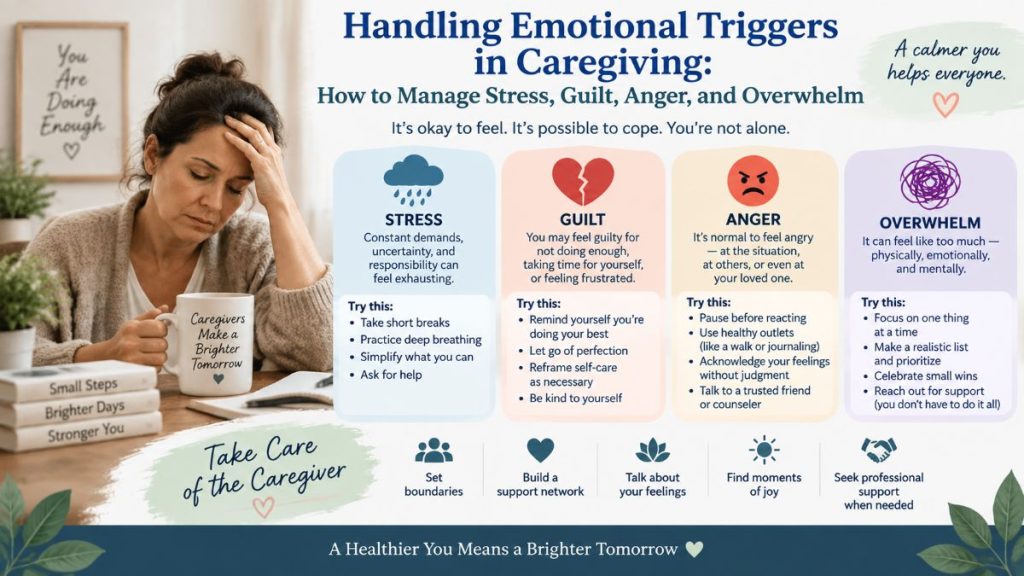
Caregiving is one of the most profound acts of love but it can also be one of the most emotionally exhausting. If you’ve ever snapped at a parent for asking the same question repeatedly, then felt crushed by guilt moments later, you’re not alone. Understanding the hidden emotional toll of caregiving is the first step toward regaining your emotional balance.
Emotional triggers in caregiving are specific situations, behaviors, or moments that spark intense reactions anger, guilt, anxiety, or grief often disproportionate to what’s happening on the surface. These triggers build up quietly, fed by exhaustion, responsibility, and love. The good news? Triggers can be identified, understood, and managed with practical strategies that protect both your well-being and your relationship with your loved one.
This guide will help you recognize your personal triggers, understand the emotions behind them, and respond with greater patience and self-compassion.
What Are Emotional Triggers in Caregiving?
An emotional trigger is a stimulus a word, behavior, memory, or situation that produces a strong emotional reaction. In caregiving, triggers often involve repeated behaviors, resistance to care, or feeling unsupported. The difference between an emotion and a trigger is important: an emotion is the feeling itself (sadness, anger), while a trigger is what activates it.
Caregiving situations create stronger reactions because they combine constant responsibility with deep emotional attachment. When you’re caring for someone you love, every difficult moment carries weight. You’re not just managing tasks you’re managing a relationship, your own identity, and often, your grief. These overlapping pressures make everyday challenges feel overwhelming, which is why overcoming common caregiving challenges requires both practical skills and emotional awareness.
Common Emotional Triggers Caregivers Experience
Triggers vary from person to person, but certain patterns appear again and again:
- Repeated requests or questions — especially common with dementia or cognitive decline
- Resistance to help — when your loved one refuses care, medication, or assistance
- Personality changes — when illness alters who your loved one used to be
- Feeling ignored by family members — carrying the load alone
- Lack of appreciation — giving endlessly without acknowledgment
- Losing personal freedom — sacrificing your time, career, or social life
Recognizing which triggers affect you most is the foundation of emotional management.
Common Emotional Responses Caregivers Experience
Anger and Frustration
Anger is one of the most common and most guilt-inducing emotions caregivers feel. It often arises from exhaustion, helplessness, or fear. When you’re running on empty and your loved one refuses to cooperate, anger becomes a release valve.
But anger is rarely the real emotion. It usually masks:
- Fear — “What if this gets worse?”
- Exhaustion — “I can’t keep doing this alone.”
- Feeling helpless — “Nothing I do makes a difference.”
Healthy responses include pausing before reacting, naming the underlying emotion, and addressing the root cause. Learning strategies for managing anxiety and anger in caregiving can prevent these emotions from overpowering you.
Guilt and Feeling Like You Are Not Doing Enough
Caregiver guilt is nearly universal. You may feel guilty for losing patience, for wanting time alone, or for considering professional care. These feelings often stem from unrealistic expectations the belief that a “good” caregiver never struggles.
Self-compassion strategies include:
- Acknowledging that guilt is a sign of love, not failure
- Replacing “I should do more” with “I am doing my best right now”
- Seeking support instead of isolating yourself
Understanding caregiving resentment and its roots can also help you process complicated feelings without shame.
Anxiety and Fear About the Future
Anxiety in caregiving often centers on:
- Health decline — wondering how much worse things will get
- Financial concerns — paying for care, missing work, covering medical bills
- Long-term care decisions — when is it time for a facility or outside help?
These worries are valid. Managing them starts with gathering information, planning ahead, and talking to professionals who understand elder care decisions.
Sadness, Grief, and Loss
Caregivers often grieve before loss occurs. This is called anticipatory grief mourning the changes in your loved one’s abilities, personality, and presence. You may miss the person they used to be even while they’re still here.
Managing grief and loss as a caregiver means allowing yourself to feel without judgment, finding moments of humor and connection, and seeking support from others who understand.
How to Recognize Your Personal Caregiving Triggers
Identify Situations That Create Strong Emotional Reactions
A trigger journal is a simple but powerful tool. For one week, record situations that spark strong emotions:
| Situation | Emotion | Response |
| Parent refuses assistance | Frustration | Pause before responding |
| Family member doesn’t visit | Resentment | Communicate needs clearly |
| Loved one repeats questions | Overwhelm | Take a short break |
Patterns will emerge. Once you see them, you can prepare responses instead of reacting in the moment. Understanding the six stages of a caregiver’s journey can also help you contextualize where you are emotionally.
Notice Physical Signs of Emotional Stress
Your body often signals stress before your mind recognizes it:
- Increased heart rate
- Muscle tension in the neck, shoulders, or jaw
- A feeling of being overwhelmed or “flooded”
- Short temper or irritability
When you notice these signs, treat them as a signal to pause and reset not push through.
Practical Strategies for Handling Emotional Triggers as a Caregiver
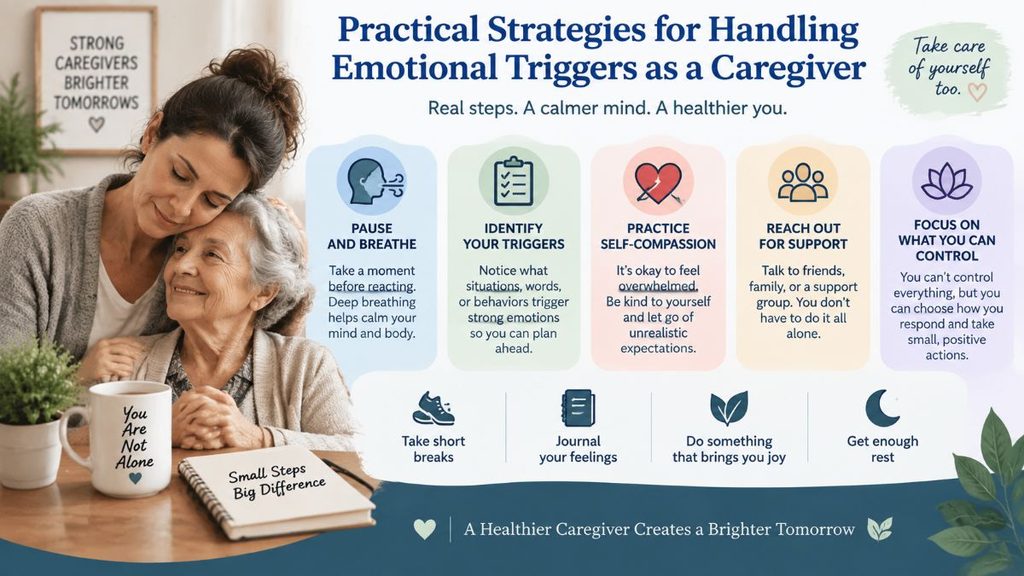
Pause Before Reacting
This is the single most effective strategy. When triggered:
- Stop — don’t speak or act immediately
- Take a breath — slow, deep breathing calms the nervous system
- Identify the emotion — name what you’re feeling
- Choose your response — respond intentionally, not reactively
Even a 5-second pause can change the entire trajectory of an interaction.
Practice Emotional Validation
Validation means acknowledging your loved one’s feelings without arguing or correcting. It defuses tension and preserves dignity.
Instead of: “You already asked me that.”
Try: “I know this feels confusing. Let’s go through it together.”
This approach is especially effective with behavior modification strategies for challenging caregiving behaviors.
Set Healthy Caregiving Boundaries
Boundaries protect your emotional health and actually improve your ability to care. This includes:
- Saying no to requests that exceed your capacity
- Asking for help from family members or professionals
- Protecting personal time for rest, work, or relationships
Maintaining a sense of independence while caregiving is not selfish it’s sustainable.
Avoid Taking Difficult Behaviors Personally
When a loved one with dementia lashes out, it’s rarely about you. Behavior may reflect illness, fear, confusion, or physical discomfort. Reminding yourself of this can prevent hurt feelings from escalating into resentment.
Managing Emotional Triggers During Difficult Caregiving Situations
When Your Loved One Becomes Angry
Steps to de-escalate:
- Stay calm — your calmness is contagious
- Avoid arguing — logic rarely works in emotional moments
- Identify the underlying need — hunger, pain, fear, or fatigue
- Redirect attention — shift to a pleasant topic or activity
When Your Loved One Refuses Help
Approach with respect:
- Honor their independence whenever possible
- Offer choices rather than commands
- Avoid power struggles they damage the relationship
For more solutions for elderly resistance during caregiving, focus on connection before correction.
When Family Members Do Not Provide Support
This is one of the most painful triggers. To address it:
- Communicate expectations clearly and specifically
- Share responsibilities in writing if needed
- Address resentment early before it hardens
How Emotional Awareness Helps Prevent Caregiver Burnout
Emotional awareness is your best defense against caregiver burnout and compassion fatigue. When you can name what you’re feeling and why, you can respond instead of react. This awareness helps caregivers:
- Reduce stress
- Improve relationships
- Maintain patience
- Protect mental health
Burnout doesn’t happen overnight it builds when emotions are ignored. Awareness interrupts that cycle.
Self-Care Strategies for Caregivers Managing Emotional Stress
Build a Support Network
You cannot do this alone. Your network may include:
- Family and friends
- Caregiver support groups (in-person or online)
- Professional counseling or therapy
- Respite care as a relief for caregivers
Make Time for Personal Recovery
Self-care isn’t indulgent it’s essential. Examples include:
- Exercise (even a short walk)
- Rest and sleep
- Hobbies and creative outlets
- Quiet time for reflection or prayer
Practicing caregiver self-care and emotional recovery is how you sustain your ability to care.
The CALM Method for Handling Caregiving Emotional Triggers
Check the Trigger
Ask yourself: “What caused this reaction?” Identifying the trigger separates the stimulus from your response.
Acknowledge the Emotion
Recognize and name it: “I am feeling overwhelmed.” Naming emotions reduces their intensity.
Lower the Intensity
Use grounding techniques:
- Deep breathing (4 counts in, 6 counts out)
- Short breaks (even 2 minutes)
- Grounding (feet on floor, name 5 things you see)
Move Forward Compassionately
Choose your next step with intention:
- Understanding instead of blame
- Patience instead of reaction
- Problem-solving instead of rumination
Frequently Asked Questions
Why do caregivers experience strong emotional reactions?
Caregiving involves constant responsibility, uncertainty, and emotional attachment, which can make stressful situations feel overwhelming. When exhaustion and love combine, emotions intensify.
How can caregivers stop reacting with anger?
Caregivers can reduce anger by identifying triggers, taking pauses, practicing emotional regulation, and addressing underlying stress. Naming the emotion behind the anger fear, exhaustion, helplessness helps defuse it.
What are common emotional triggers for caregivers?
Common triggers include repeated behaviors, resistance to care, lack of support, exhaustion, and fear about a loved one’s health. Recognizing your personal patterns is the first step to managing them.
How do you stay patient when caring for an aging parent?
Patience improves when caregivers practice empathy, set boundaries, take breaks, and understand the reasons behind difficult behaviors. Reminding yourself that behavior often reflects illness or fear not intention helps maintain perspective.
Can emotional stress cause caregiver burnout?
Yes. Continuous emotional stress without adequate support can contribute to exhaustion, frustration, and caregiver burnout. Emotional awareness and self-care are essential preventive measures.
Final Thoughts
Caregiving will always include difficult emotions that’s not a sign you’re doing it wrong. It’s a sign you’re human, and you’re doing something incredibly hard. The goal isn’t to eliminate anger, guilt, or grief. It’s to recognize them, understand them, and respond in ways that protect your well-being and your relationship with your loved one.
Start with one strategy: pause before reacting, journal your triggers, or ask for help. Small changes create lasting resilience. You deserve the same compassion you give so freely to others.