
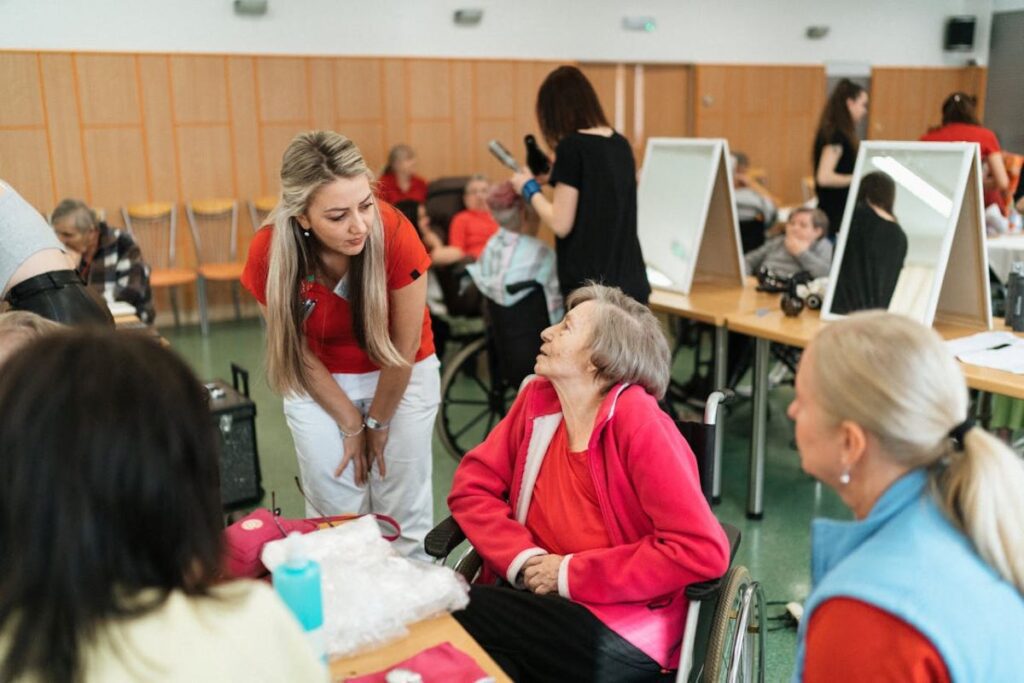
Photo by Jsme MILA
The Power of Support Groups in Caregiving: A Lifeline for When You Feel Adrift
Caregiving is one of the most loving and important jobs a person can do. It’s also one of the hardest. If you are caring for a spouse, a parent, a child, or a friend, you know this feeling well. The long days, the constant worries, and the feeling that you are completely alone can be overwhelming.
You might be asking yourself: “Is what I’m feeling normal?” or “Who can I talk to who actually gets it?”
The answer to these questions often lies in a powerful, yet simple, resource: a caregiver support group. Think of a support group not as another task on your to-do list, but as a lifeline—a safe harbor in the storm of caregiving.
This article will explain exactly what a support group is, why it’s so powerful, and how it can become your most important tool for not just surviving, but thriving as a caregiver.
What Exactly Is a Caregiver Support Group?
At its heart, a caregiver support group is a regular gathering of people who are all caring for a loved one. These groups are led by a professional (like a social worker or therapist) or by a trained peer (another caregiver).
It is not a therapy session where you are being treated for an illness. It is not a place for people to feel sorry for themselves.
Instead, it is a place of shared understanding. It’s a room (or a video call) filled with people who nod their heads because they’ve been there too. They know the frustration of medication schedules, the grief of watching a loved one change, and the guilt of wanting just five minutes to yourself.
Groups can be general (for anyone who is a caregiver) or specific to a certain condition, like:
- Alzheimer’s or Dementia Support Groups
- Cancer Caregiver Groups
- Parkinson’s Disease Caregiver Groups
- Groups for Parents of Children with Special Needs
They can meet in person at a community center, library, or hospital, or online through video chats and forums.
Why You Need This Lifeline: The Real-World Benefits
You might think, “I don’t have time for this,” or “Talking to strangers won’t help.” But the benefits are real and can save your own health and sanity. Here’s how.
1. You Realize You Are NOT Alone
This is the most immediate and powerful benefit. Caregiving can be incredibly isolating. You might feel like no one in your world understands the weight you carry. In a support group, you instantly connect with people who are on a similar journey. This simple realization—that you are not the only one—can lift a huge weight off your shoulders.
Statistic: A study by the National Alliance for Caregiving and AARP found that over 1 in 5 Americans are acting as a caregiver to an adult or child with special needs. That’s 53 million people! You are part of a massive community, even if it doesn’t feel like it.
2. A Safe Space to Be Honestly You
Where else can you say, “I love my husband, but today I was so angry I had to walk out of the room,” without being judged? In a support group, you can share the “ugly” feelings—the frustration, resentment, guilt, and sadness—in a safe and confidential space. Letting these feelings out is like opening a pressure valve, preventing you from boiling over.
3. Practical, “In-the-Trenches” Advice
While doctors and therapists provide crucial medical advice, sometimes you need a “caregiving hack.” Support groups are a goldmine for practical tips you won’t find in a textbook.
- “How do I get my dad to take a shower without a fight?”
- “What’s a good brand of incontinence supplies that doesn’t leak?”
- “Any ideas for quick, healthy meals I can make for my mom and my kids?”
The members of your group have tried and tested solutions for these everyday challenges.
4. An Emotional Boost and Reduced Stress
Sharing your burden and hearing others’ stories does more than just feel good—it’s good for your health. Studies show that social support can lower levels of stress hormones like cortisol. It can reduce feelings of depression and anxiety and help you feel more capable and hopeful.
Statistic: According to a report by the Centers for Disease Control and Prevention (CDC), caregivers are more likely to experience symptoms of depression and anxiety, and have poorer physical health, than non-caregivers. Support groups are a proven way to combat these negative effects.
5. Becoming a Better, More Informed Caregiver
By learning from others, you become more knowledgeable and confident in your role. You might learn about a new community resource, a different way to communicate with your loved one’s doctor, or a better understanding of the disease they are facing. This knowledge empowers you to provide better care without burning out.
Finding Your Group: A Step-by-Step Guide
Ready to give it a try? Here’s how to find a group that fits your needs.
- Ask a Professional: Start with your loved one’s doctor, a hospital social worker, or a therapist. They often have lists of local, reputable groups.
- Check National Organizations: Major disease-specific organizations are a fantastic resource.
- Alzheimer’s Association: Offers support groups across the U.S.
- American Cancer Society: Provides resources for cancer caregivers.
- American Parkinson Disease Association: Hosts many local support groups.
- Arc: A great resource for caregivers of people with intellectual and developmental disabilities.
- Search Online: Use specific search terms like “dementia caregiver support group near me” or “online cancer caregiver forum.”
- Look at Local Resources: Check your local library, senior center, or community center bulletin boards.
In-Person vs. Online Groups: Which is Right for You?
- In-Person Groups are great if you want face-to-face connection and a reason to get out of the house. The personal energy in the room can be very powerful.
- Online Groups are perfect if you can’t leave your loved one alone, have a tight schedule, or live in a rural area. They offer incredible flexibility and a wide pool of people to connect with.
Try one type, and if it doesn’t feel right, try another! It might take a few meetings to feel comfortable, and that’s okay.
FAQs: Your Questions, Answered
Q: I’m a private person. Is a support group really for me?
A: Absolutely. You don’t have to share until you’re ready. Many people find that just listening to others is incredibly helpful and validating. You can participate at your own pace.
Q: What if the group is just a bunch of people complaining?
A: A well-facilitated group is not a complaining session. It’s a problem-solving session. The leader guides the conversation toward sharing feelings, offering support, and finding solutions. If you join one group that feels negative, try a different one. The group’s vibe depends a lot on its members and leader.
Q: I’m too busy. How can I possibly fit this in?
A: Think of it this way: an hour or two at a support group can save you many hours of stress and mistakes down the road. It’s an investment in your own well-being, which makes you a better, more efficient caregiver. Online groups, especially forums, can be accessed anytime, day or night.
Q: Will I have to talk about really personal things?
A: You only share what you are comfortable sharing. The group is built on confidentiality and respect. What is said in the group, stays in the group.
Q: My situation is unique. Will anyone really understand?
A: While every caregiving journey is different, the core emotions—love, grief, stress, guilt, exhaustion are universal. You may be surprised at how much you have in common with others, even if their specific situation seems different.
You Deserve Support, Too
Being a caregiver is like being on an airplane when the oxygen masks drop down. The safety instructions always tell you to put on your own mask first before helping others. Why? Because if you run out of oxygen, you can’t help anyone.
A support group is your oxygen mask. It is not selfish to take time to care for yourself. It is essential. By filling your own cup, you ensure you have something left to give to the person you love so much.
Reaching out for a lifeline is a sign of strength, not weakness. It means you are smart, resilient, and committed to being the best caregiver you can be—for your loved one, and for yourself.

