
Photo by Gary Barnes
Sicilian caponata for chefs proves that the best dishes are sometimes the simplest. With eggplant, tomatoes, and vinegar as its base, this Sicilian classic balances sharpness and sweetness in every bite. It works just as well for a home cook as it does for a professional chef. The method, the flavors, and the results feel all well and complete.
A Recipe for Every Kitchen
In family-style Italian recipes for professional kitchens, caponata seizes a special place. It is modest enough for a weekday meal but refined enough for restaurant service. You can serve it warm as a side or cold as part of an antipasto. Its balance of sweet and sour never fails to satisfy. The dish does not need modern twists or showy plating to impress. What matters is the precision and control in each step.
The Sicilian Story Behind It
Caponata started as a fisherman’s dish. It used what Sicily had in abundance: eggplant, tomatoes, and olive oil. Over centuries, it evolved into something both rustic and elegant. Arab traders introduced eggplant to Sicily. Spanish influence brought in tomatoes. Locals added olives, capers, and vinegar. Together these flavors created what we now call the traditional Sicilian caponata recipe.
Every spoonful carries a bit of history. It reflects a culture that values thrift, balance, and patience. Sicilians understood that good food does not need wealth. It needs thought and time.
What to Prepare: Sicilian Caponata for Chefs and Home Cooks
Caponata depends on good produce. The ingredients are simple, so quality makes all the difference. Choose firm, shiny eggplants, ripe tomatoes, and crisp celery. Use extra virgin olive oil and sea salt if possible.
Ingredients:
- 2 medium eggplants, diced
- 1 large onion, chopped
- 2 celery stalks, sliced thin
- 2 ripe tomatoes, peeled and diced
- 3 tablespoons tomato paste
- 1/4 cup green olives, chopped
- 2 tablespoons capers, rinsed
- 1/4 cup white vinegar
- 2 tablespoons sugar
- Olive oil, salt, and pepper
These ingredients create a natural rhythm. Each one adds a layer of taste. The vinegar cuts through the sweetness, the tomato gives body, and the eggplant holds it all together.
Step-by-Step Preparation
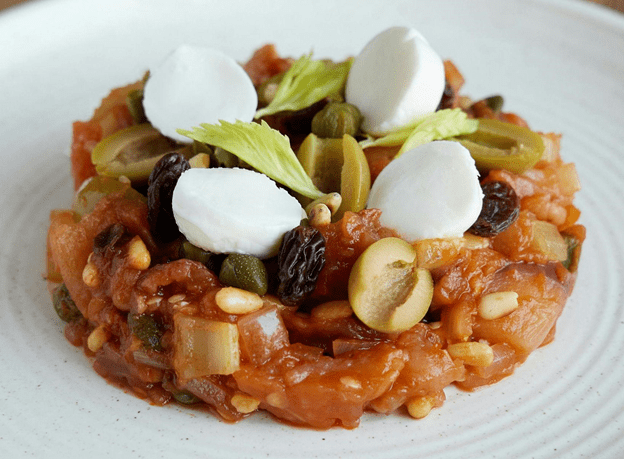
To make Sicilian caponata for chefs, you need more patience than skill.
- Salt the eggplant. Spread the diced pieces on a towel, sprinkle salt, and let them rest for 30 minutes. This draws out water and softens the flavor.
- Fry the eggplant. Heat olive oil and fry until golden. Set aside to drain on paper towels.
- Cook the base. In the same pan, sauté onion and celery until soft. Add the tomatoes and tomato paste. Simmer until the mixture thickens slightly.
- Build the flavor. Add olives, capers, vinegar, and sugar. Stir gently. Let it cook for about ten minutes until everything blends.
- Combine and cool. Add the fried eggplant and mix carefully. Taste and adjust salt. Let it rest before serving.
Caponata improves as it sits. When served cold or at room temperature, the flavors settle and blend beautifully.
For background on Sicilian ingredients and cooking methods, visit Italy Magazine. It offers valuable insight into regional Italian cuisine and the culture that shaped it.
Why It Works for Chefs
Professional chefs favor this dish because it is dependable. Once prepared, it keeps well and often tastes better the next day. The sweet-and-sour base, called agrodolce, defines its character. It has no shortcuts. The vinegar gives edge, and the sugar rounds it out. Together they form a balance that stands out without effort.
Serve Sicilian caponata for chefs as an appetizer, side dish, or topping for bruschetta. It also pairs nicely with grilled fish or roasted chicken. For a light menu, it works as an eggplant Italian appetizer that feels rich but not heavy.
Small Changes, Big Impact
Tradition allows space for creativity. You can keep the recipe classic or make small changes. Some cooks add roasted red peppers for color. Others toss in pine nuts or raisins for texture. A spoon of aged balsamic vinegar deepens the taste. These small touches let you make Sicilian caponata for chefs your own while keeping its spirit intact.
If you are serving it in a restaurant, keep portions tidy and consistent. At home, let it feel more relaxed. The same flavors belong in both settings. That flexibility is what makes this dish timeless.
What It Represents: Sicilian Caponata for Chefs and Home Cooks
Caponata represents a way of cooking that values restraint. Nothing goes to waste. Each ingredient has meaning. It is a dish that rewards attention, not complexity. That is why it continues to appear in both homes and restaurants.
Cooking this dish is an act of memory. It connects generations through taste and shared effort. It reminds us that the heart of Italian cooking lies in care, not speed.
If you enjoy recipes that carry family stories, explore Generations of Good Food by Eleanor Gaccetta. The book captures the comfort of homemade meals and the tradition of passing recipes from one cook to the next. Like caponata, her writing celebrates food as part of life, not just something served on a plate. Her book contains her family’s caponata recipe.