Photo by jplenio1
What is a memory care facility? Let’s answer that question in this article.
To forget, often, is to hurt. That is why we cherish those moments where we walk down memory lane, amazed by the width of the road and the lushness of the flowers growing on the sides.
But, regardless of how much we may fight against it, memory can only hold on for so long before it starts to deteriorate. When people’s memories begin to falter, it is often times incumbent upon those around them to begin making their decisions for them. Making decisions for a loved one who struggles with forgetfulness can feel overwhelming–and when the inevitable happens (that they can no longer live independently), it becomes even more so.

Photo by pikisuperstar
What Even is a Memory Care Facility?
A memory care facility is a special kind of nursing home designed for people living with Alzheimer’s disease or other types of dementia. These entities focus on keeping memory lane open and active for residents, even when their ability to form new memories fades.
Unlike regular assisted living homes, memory care facilities build their entire routine around the needs of people whose mental states are compromised. As such, the staff of memory care facilities is specially trained to handle the unique challenges of memory loss while the building itself is designed with safety in mind.
Predictability is encoded in these institutions, with a typical day following a structured schedule. This structure helps alleviate the fear and the anxiety that come from the slow decline of the mind because the person knows what comes next in their daily routine: when the meals come, when specific activities happen, when it’s time to sleep, etc. For someone whose mind struggles to hold onto new information, the rhythm provided by a memory care facility is like an anchor.
Why Specialized Care Makes a Difference
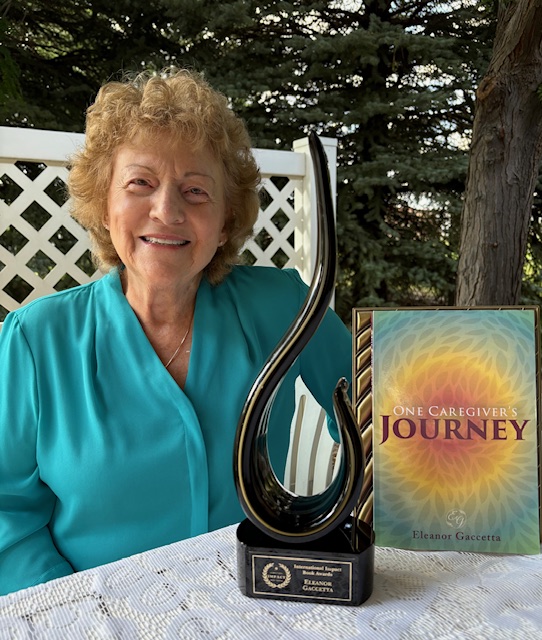
Eleanor Gaccetta, who cared for her mother for over nine years, wrote in One Caregiver’s Journey that “the life of a caregiver [is]…is the question you will ultimately ask and answer.” Her words capture the exhaustion families feel when providing round-the-clock care at home.
Dementia changes more than just a person’s ability to recall a name or a date. The disease quite literally alters their personality, their mood, and their sense of safety. This makes it so that taking care of them becomes progressively more and more difficult as time passes and their condition worsens.
When family care reaches its limit, that’s where memory care facilities step in. These are places that offer comprehensive help with bathing, dressing, taking medicine, and using the bathroom. Here, nurses and aides stay on the property at all hours, ready to attend to their charges whenever and however, while doctors, physical therapists, and psychiatrists make regular visits to check on residents.
This level of thought, together with a dedicated and well-thought-out system, is a tremendous weight off of families, giving them the peace of mind that they sorely need, knowing that their loved ones are never sitting alone in confusion or discomfort.
Bringing Joy and Connection
The daily schedule in a memory care facility looks nothing like a hospital ward. Within these communities, residents never have a dull day (unless asked for, of course). Calendars here are filled with activities that are specially chosen and designed to engage the mind and lift the spirit.
There’s gardening to let residents dig into the earth, feel the sun on their faces, and tend to flowers. Music therapy is present to help activate regions of the mind to stymy mental degradation and reduce stress and sadness.
Perhaps, best of all, memory care facilities allow people with dementia and other symptoms that are debilitating to the mind to form a community with each other. Social gatherings give residents a chance to interact with peers who share similar struggles, reducing the isolation that so often accompanies cognitive decline. Thus, reminiscing becomes a group activity rather than a lonely exercise.
Safety, Security, and Dignity
For families with a member who is suffering from cognitive decline, safety and security are of the utmost importance, with only dignity scoring high above both. While the first days of mental deterioration are bearable, time only manages to worsen its conditions and the ability to engage with it meaningfully without the much-needed paraphernalia and commitment.
Of course, that is impossible to achieve, especially for the average family. Consider that people with dementia sometimes wander outside when given the opportunity. Wandering poses one of the greatest risks for people with dementia, who are most likely to become lost within minutes after the fact, unable to remember their own name and address.
Memory care facilities prevent this tragedy through careful design of their physical locations, with secure entrances and exits that keep residents safe while still allowing them to move freely within the premises. Some facilities have tracking bracelets that provide an extra layer of protection for those who might try to leave.
The number of staff compared to the residents in memory care facilities is also much higher than in standard nursing homes, which means that there are more eyes watching, more hands helping, and more patience available when a resident becomes particularly agitated and uncooperative. Employees learn de-escalation techniques that calm rather than confront. They understand that arguing with a confused person only makes the situation worse.

Photo by artursafronovvvv
Keeping Up with Memory Lane
Gaccetta learned through her own experience that “it is imperative in caregiving to find the balance necessary for a peaceful existence in what is often a very trying situation.” Memory care facilities strive to create that balance every single day. They accept that the resident may never regain what they have lost. Instead, they focus on preserving dignity and finding small moments of genuine happiness.
Hopefully, the contents of this article help you consider memory care facilities and their benefits, so that you can offer your loved ones the security they need and the care they deserve.
If you or someone you love faces the challenges of caregiving, you will find comfort and practical advice in Eleanor Gaccetta’s One Caregiver’s Journey.