Introduction
Watching a loved one struggle with memory loss can be confusing and heart-wrenching. As you search for the best way to support them, you’ll likely hear terms like “memory care” and “dementia care.” Often, these words are used as if they mean the same thing. This can make an already tough decision feel even harder.
So, what is the real difference between memory care and dementia care? In short, think of it this way: all memory care is a type of dementia care, but not all dementia care is memory care.
This article will be your friendly guide. We will break down what each term means, highlight their key features, and help you understand which option might be the best fit for your family. Our goal is to give you clear, accurate information so you can feel confident and informed.
1. Understanding Memory Care
1.1 What Is Memory Care?
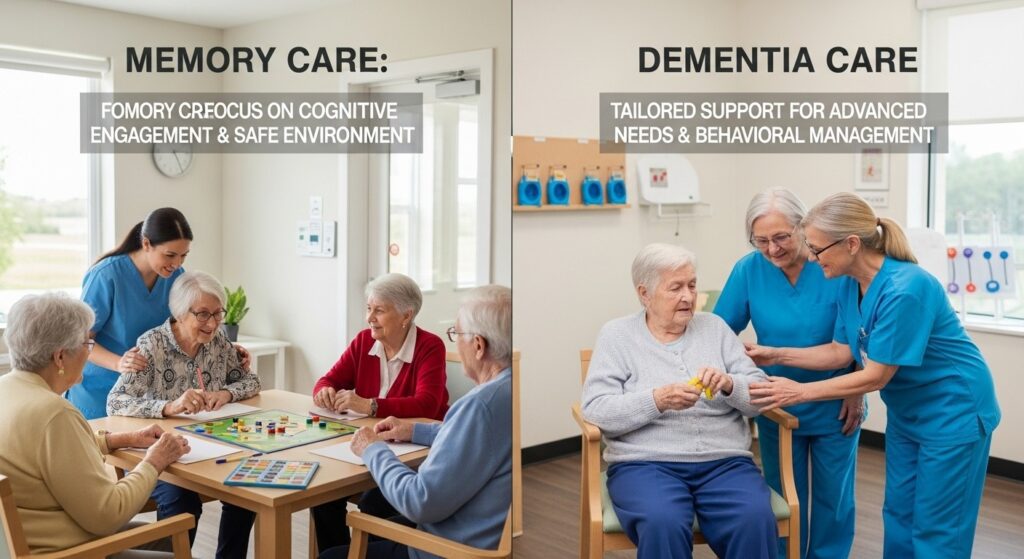
Memory care is a specific type of residential housing designed for people with memory loss. Think of it as a safe, structured neighborhood built just for them. These are often separate wings in an assisted living facility or entire buildings dedicated to memory support.
The main goal of memory care is to provide a secure environment that reduces stress and confusion. It’s for individuals who may not need intense medical care but can no longer live safely on their own due to conditions like Alzheimer’s disease or other forms of dementia.
1.2 Features of Memory Care
- Secure Environment: Doors are locked or monitored to prevent wandering, a common and dangerous behavior. Outdoor spaces are enclosed and safe for walking and enjoying fresh air.
- Trained Staff: Caregivers in memory care are specially trained to handle the unique challenges of memory loss, like repetition, agitation, and confusion.
- Structured Routine: A predictable daily schedule helps residents feel calm and oriented. Meals, activities, and bedtime happen around the same time each day.
- Cognitive Activities: Programs are designed to engage the mind and slow cognitive decline. This might include music therapy, simple art projects, or reminiscing about the past.
- Sensory Cues: Memory care units often use colors, pictures, and memory boxes outside rooms to help residents recognize their own home.
For activity ideas you can also do at home, explore this resource: 101 Things to Do with Dementia Patients.
1.3 Benefits of Memory Care
- Promotes Safety: The number one benefit is knowing your loved one is safe from wandering and accidents.
- Reduces Anxiety: The predictable routine and familiar environment lower stress for the resident.
- Encourages Socialization: Residents can connect with others in a supportive, understanding community.
- Supports Family: It gives family caregivers peace of mind and a much-needed break from the 24/7 demands of caregiving.
2. Understanding Dementia Care
2.1 What Is Dementia Care?
Dementia care is a broader term. It describes the overall approach and support given to a person living with any form of dementia (Alzheimer’s, Vascular Dementia, Lewy Body Dementia, etc.). The key difference is that dementia care is not a single place—it’s a type of care that can happen in many settings.
This care can be provided:
- At home by family members or professional aides.
- In adult day care centers.
- In assisted living facilities (which may or may not have a dedicated memory care unit).
- In nursing homes for those with more advanced medical needs.
2.2 Features of Dementia Care
- Person-Centered Approach: This care focuses on the individual’s life story, preferences, and remaining abilities. It’s about who they are as a person, not just their disease.
- Behavioral and Emotional Management: Caregivers are trained to respond to symptoms like sundowning (increased agitation in the evening), paranoia, and personality changes with patience and understanding.
- Focus on Daily Living: Help with tasks like bathing, dressing, and eating. This is often called Activities of Daily Living (ADLs). For tips on handling difficult tasks, see Why Dementia Patients Refuse to Shower.
- Medical Management: Includes help with medication, doctor’s appointments, and managing other health conditions alongside dementia.
2.3 Benefits of Dementia Care
- Flexibility: It can be adapted to any stage of the disease, from early to late.
- Comprehensive: It addresses the whole person—their medical, emotional, and social needs.
- Can be More Personal: When provided at home, it allows the person to stay in a familiar environment.
- Family Involvement: This model often relies on and educates family members. To understand the caregiver’s role, read Who is Responsible for Dementia Care?
3. Key Differences Between Memory Care and Dementia Care
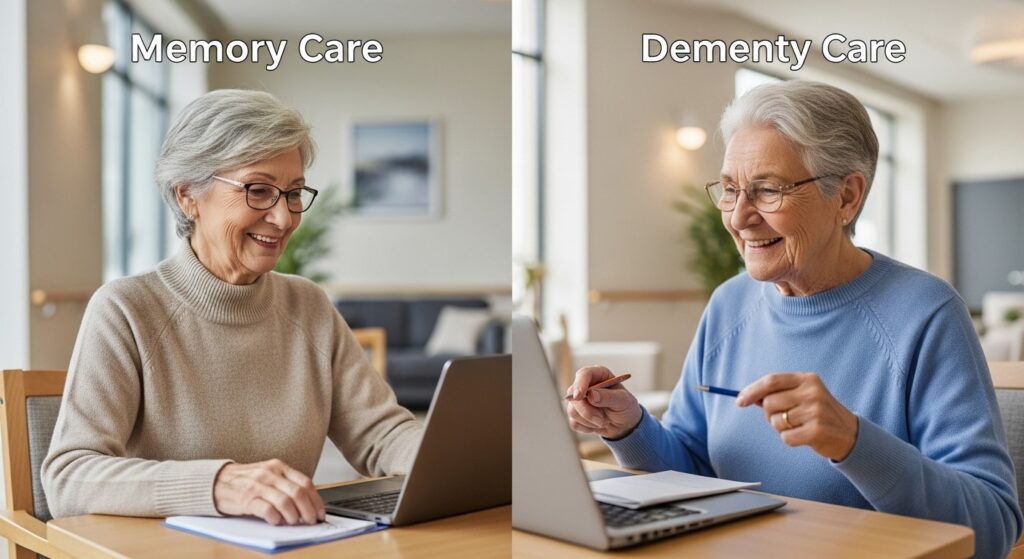
Let’s look at them side-by-side to make the distinctions crystal clear.
| Aspect | Memory Care | Dementia Care |
| Definition | A specialized residential facility for memory impairment. | A broad approach to care for all stages and types of dementia. |
| Setting | A dedicated, secure wing or building (often part of a larger community). | Can be provided at home, in a nursing home, or in assisted living. |
| Focus | Safety, structure, routine, and memory support in a group environment. | Managing the overall symptoms and progression of the disease, tailored to the individual. |
| Staff Training | Specialized in memory-loss behaviors and creating a therapeutic environment. | Specialized in the progression of dementia and responding to its changing symptoms. |
| Cost | Often higher due to 24/7 security, specialized activities, and residential amenities. | Varies widely; in-home care is hourly, nursing home care is typically the most expensive. |
4. Similarities Between the Two
While they have differences, memory care and dementia care share the same heart. Both aim to:
- Maximize Safety and Well-being: Protecting the person from harm is the top priority.
- Provide Cognitive Stimulation: Both involve activities that keep the mind active for as long as possible.
- Use Individualized Care Plans: Care is tailored to the person’s history, likes, and dislikes.
- Offer Behavioral Support: Caregivers in both settings are trained to respond with compassion to confusion or agitation.
- Value Family Involvement: Keeping the family connected and informed is a key part of the care process. For support, consider Support Groups: Navigating Dementia.
5. When to Choose Memory Care vs. Dementia Care
How do you know which path is right for your loved one? Here are some signs to look for.
5.1 Signs Your Loved One May Need Memory Care
- They are physically healthy but keep wandering or getting lost.
- They forget to turn off the stove, take medication, or lock doors.
- They feel lonely or isolated at home and could benefit from social activities.
- The family caregiver is feeling overwhelmed and burned out.
- Their home environment is no longer safe, even with help.
5.2 Signs Your Loved One May Need a Broader Dementia Care Approach (like a nursing home)
- They have advanced dementia and need help with most daily tasks (eating, moving, etc.).
- They have other serious medical conditions requiring frequent nursing care.
- They exhibit aggressive behaviors that are difficult to manage at home.
- A doctor has recommended 24/7 medical supervision.
6. Factors to Consider Before Deciding
Making this choice is deeply personal. Here are key questions to discuss as a family:
- Stage of Decline: Where is your loved one in their journey? An MRI can sometimes help with early diagnosis. Learn more: Can an MRI Detect Early Signs of Dementia?
- Budget: What can you afford? Explore long-term care insurance, veterans’ benefits, and Medicaid.
- Medical Needs: Does your loved one need more than just memory support?
- Location: Is it important for them to be close to family?
- Staff Expertise: Always ask about the staff’s specific training and experience with dementia.
7. Questions to Ask a Care Facility
If you tour a memory care community or a facility offering dementia care, don’t be shy. Ask these important questions:
- What is your staff-to-resident ratio?
- What specific dementia training do your caregivers receive?
- Can you show me a sample activity calendar?
- How do you handle medical emergencies?
- How do you communicate with families about changes in condition?
- What is your policy on wandering, and how do you keep residents safe?
8. Real-World Perspective: A Caregiver’s Insight
As a topic rooted in health and well-being, it’s important to provide trustworthy information. According to the Alzheimer’s Association, over 6 million Americans are living with Alzheimer’s, and that number is growing. This isn’t just a personal issue; it’s a public health one.
From the experience of countless caregivers, the transition to a care facility is often filled with guilt. But as one family member shared, “Moving my mom to memory care was the hardest decision I ever made, but also the best. She was lonely and anxious at home. Now, she has friends, activities, and constant care. She’s safer, and I can go back to being her daughter instead of her stressed-out nurse.” The right care can improve the quality of life for everyone involved.
The value of routine in this journey cannot be overstated. A predictable day can significantly reduce anxiety for a person with dementia. For guidance, see Establishing Routines for Care.
9. Conclusion
Understanding the difference between memory care and dementia care helps you see the full picture. Memory care is a specific, safe haven for those whose main challenge is memory loss. Dementia care is the umbrella term for all the supportive, compassionate care that helps a person live with their condition, wherever they are.
Both are dedicated to the same beautiful goal: helping your loved one live with dignity, comfort, and joy for as long as possible.
Your Next Step: We recommend speaking with your loved one’s doctor and touring local facilities. Seeing the environments and talking to the staff is the best way to find a place that feels like home.
Frequently Asked Questions (FAQs)
Q1: What is included in memory care?
Memory care includes a private or shared room in a secure facility, all meals, help with daily tasks (bathing, dressing), medication management, 24/7 supervision, and a full program of activities designed for cognitive stimulation.
Q2: Is memory care the same as Alzheimer’s care?
Yes, for the most part. Alzheimer’s is the most common cause of dementia, so memory care facilities are primarily designed for people with Alzheimer’s disease. They are also equipped to care for individuals with other types of memory-impairing conditions.
Q3: How much does dementia care cost?
Costs vary dramatically based on location and type of care. In-home care is often charged by the hour. Memory care can cost anywhere from $4,000 to $8,000 per month on average. Nursing home care is typically the most expensive. It’s crucial to get detailed cost information from local providers.
Q4: Can someone with dementia live in a memory care facility?
Absolutely. In fact, that is the primary purpose of a memory care facility. They are designed specifically for individuals with dementia who cannot live safely on their own.
Q5: What are small things that can help a loved one with dementia at home?
Small changes can make a big difference! Ensure they have comfortable, non-slip footwear like the ones suggested in Shoes for Dementia Patients. Prepare easy, nutritious meals (Easy Meals for Dementia Patients). And if you are a supporter of a caregiver, consider a thoughtful Gift for a Dementia Caregiver to show your appreciation.