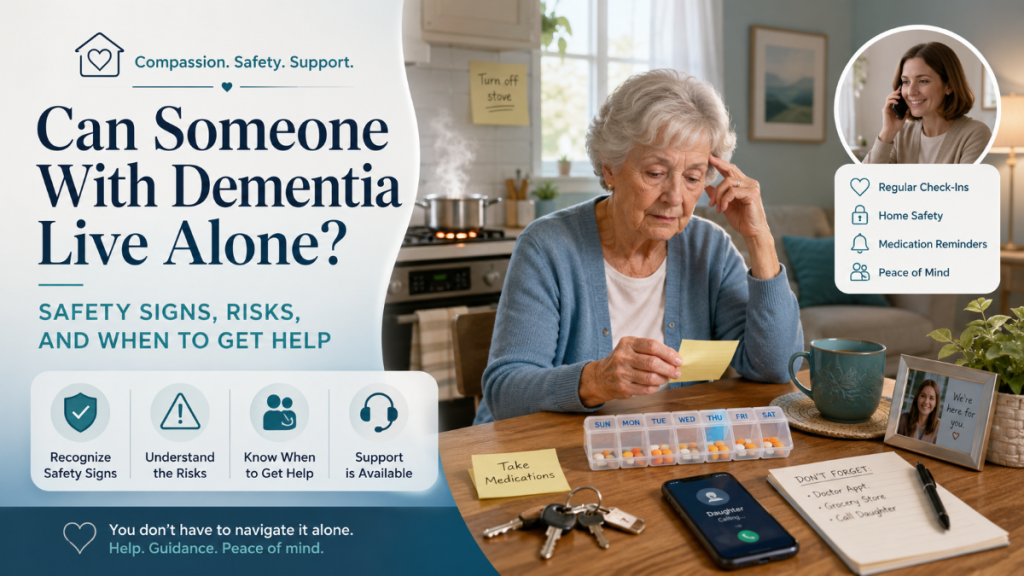
The worry often starts small—a missed phone call, a forgotten appointment, an odd comment that doesn’t quite make sense. Then comes the harder question: Can someone with dementia live alone? It’s a question loaded with love, fear, and the weight of a lifetime of independence. The answer isn’t a simple yes or no, but a careful evaluation of safety, risk, and the individual’s unique situation. Many people live alone with early-stage dementia for a time, but the condition is progressive, and what works today may not be safe tomorrow. This guide will help you assess whether independent living is still viable, identify critical warning signs, and create a plan for the future. Navigating this journey requires accurate information and a clear understanding of the support through the stages of dementia available to families.
Can Someone With Dementia Live Alone Safely?
A Dementia Diagnosis Does Not Automatically End Independence
Receiving a dementia diagnosis is not an immediate sentence to lose all independence. Many individuals in the early stages of the disease can continue to live safely in their own homes with appropriate support. The National Institute on Aging provides valuable guidance on living alone with early-stage dementia, emphasizing that with the right strategies, independence can be maintained longer than many assume. Research from the University of Exeter found that while people living alone with dementia often experience more loneliness and less satisfaction with life, “it is possible to ‘live well’ with mild-to-moderate dementia while living alone, given appropriate support, including home care and equipment.” This is a crucial point. The goal should be to maximize autonomy and quality of life for as long as it is safe to do so.
Living Alone vs. Living Without Support
A critical distinction exists between living alone and living without help. Someone with dementia can reside independently if they have a robust support network. This includes family members, friends, or professional caregivers who provide regular check-ins, help with tasks like grocery shopping, and ensure medication is taken correctly. The University of Exeter’s longitudinal study found that those living alone often had better cognitive and functional ability initially but experienced “poorer physical, social, and psychological health” over time. This disparity highlights that while solitary living is possible, it requires active intervention to maintain health and well-being.
Why the Answer Can Change Over Time
Dementia is a progressive condition. The judgment and insight of someone in the early stages differ dramatically from someone with moderate or advanced dementia. The Banner Alzheimer’s Institute explains that “There will come a time when it is not safe for them to live alone.” This journey is not static. What is manageable with a few reminders today might evolve into a significant safety risk in just a few months. Regular, honest reassessments are essential for determining when the balance tips from support to a need for full-time care.
What Determines Whether Someone With Dementia Can Live Alone?
To evaluate if someone can live alone, you must look beyond a diagnosis and assess their functional and cognitive capabilities. The following factors are the most reliable indicators.
Memory and Orientation
At its core, dementia disrupts the ability to remember and navigate the world. Can the person recall daily routines, important appointments, and where they put essential items? Are they getting lost in previously familiar places? Significant memory loss impairs the ability to manage daily life and respond to emergencies.
Judgment and Decision-Making
This is perhaps the most critical factor for safety. Can the person make sound decisions about their health, finances, and personal safety? Dementia often impairs insight, meaning the individual may not recognize that they are unsafe or making poor choices. This lack of awareness can lead to dangerous situations like leaving the stove on or falling for financial scams.
Activities of Daily Living (ADLs)
These are the basic, self-care tasks fundamental to independent living. They include:
- Eating and Nutrition: Can they prepare meals and eat regularly without forgetting? Unexplained weight loss can be a significant sign of trouble.
- Bathing and Hygiene: Are they maintaining personal cleanliness? Neglecting hygiene or wearing the same clothes repeatedly often indicates a person is struggling.
- Dressing: Can they dress appropriately for the weather?
- Toileting: Do they have accidents or need reminders to use the bathroom?
- Transferring: Can they get in and out of bed or a chair without assistance?
Instrumental Activities of Daily Living (IADLs)
These are more complex tasks necessary for community living. Difficulty with IADLs can signal that living alone is becoming unsafe. These include:
- Managing Finances: Unpaid bills, unusual purchases, or falling for scams are red flags.
- Medication Management: Forgetting to take medication or taking the wrong dose is a serious risk.
- Housekeeping: Is the home becoming unkempt, cluttered, or a fire hazard?
- Using Transportation: Can they drive safely or use public transport independently? (See the section on driving below.)
- Phone Use: Can they manage phone calls and use it to call for help in an emergency?
How Dementia Stage Affects Living Alone
Mild or Early-Stage Dementia
In this stage, many can live alone with minimal assistance. They may struggle with some IADLs, like managing complex finances, but their basic ADLs are largely intact. They typically maintain insight and can recognize the need for help with certain tasks. This is the ideal time for legal and financial planning and establishing a support system.
Moderate Dementia
This stage is a turning point. The person’s abilities decline significantly. As one healthcare source notes, “in the middle stages, 24-hour supervision will be needed.” Safety concerns, including wandering and cooking hazards, become prevalent. The ability to manage ADLs declines, and the person loses insight into their limitations. Living alone at this stage is generally considered unsafe without constant supervision.
Advanced Dementia
At this stage, a person requires round-the-clock care. They often lose the ability to walk, communicate coherently, and perform any ADLs independently. Living alone is no longer a possibility; they require a memory care or nursing home environment for 24/7 professional support.
10 Signs It May No Longer Be Safe to Live Alone
One of the most vital roles of a caregiver is recognizing when a situation is no longer safe. If you’re noticing multiple issues, it may be time to consider 11 signs it might be time for assisted living. Here are ten critical signs:
- Unexplained weight loss or malnutrition: Indicates an inability to shop for or prepare food.
- Wandering or getting lost: A significant safety risk, especially if it occurs outside the home. For strategies to manage this, learn how to stop dementia patients from wandering at night. The Alzheimer’s Association identifies wandering and dementia as a common safety risk and recommends planning ahead, home modifications, regular check-ins, and alternative transportation where appropriate.
- Signs of fire or cooking hazards: Burn marks on counters, left-out food, or a smoky smell.
- Missed medications or incorrect dosages: Can lead to serious health consequences.
- Poor personal hygiene or disheveled appearance: Suggests an inability to manage self-care tasks. You may need guidance on how to get a dementia patient to shower if this becomes a recurring challenge.
- Dehydration: Dizziness, dark urine, or constant thirst are warning signs.
- Unpaid bills, unusual purchases, or evidence of financial scams: Signals a loss of financial judgment.
- Hoarding or a significantly unkempt home: Indicates an inability to maintain the household.
- Frequent falls or unsteadiness: A major fall can lead to a hip fracture and a significant decline. For more information, see our guide on dementia patients and hip fractures. The CDC identifies older adult fall prevention as a major priority, emphasizing that many falls are preventable.
- Increased confusion, paranoia, or agitation: Emotional changes can lead to unsafe behaviors and risk of injury.
Biggest Risks of Living Alone With Dementia
The risks of a person with dementia living alone are numerous and severe. Understanding them is the first step in mitigating them.
Falls and Injuries
Falls are the most common cause of injury for older adults. Visual-spatial issues and poor judgment make people with dementia highly susceptible.
Cooking and Fire Hazards
A person may forget they left the stove on, place flammable items near a heat source, or forget how to use appliances safely. This is a constant and significant risk.
Medication Errors
The inability to track medication schedules can lead to life-threatening missed doses or overdoses.
Wandering
A person may leave the house and get lost, confused, and unable to find their way home. The wandering and dementia risk is extremely high, with potentially fatal outcomes.
Malnutrition and Dehydration
Forgetting to eat or drink, or lacking the cognitive ability to prepare food, leads to serious health declines.
Financial Scams
The inability to recognize suspicious situations makes them easy targets for financial exploitation and fraud. The NIA provides guidance on managing money problems for people with dementia, noting that financial-management problems can appear relatively early and discussing unpaid bills, unusual purchases, fraud, financial abuse, and advance arrangements for managing finances.
Isolation
Living alone exacerbates the loneliness and social withdrawal common in dementia, which can accelerate cognitive decline and depression.
Medical Emergencies
In a crisis, the person may not recognize the emergency or know how to call for help. As Banner Health notes, a lack of ability to react appropriately in an emergency is a key indicator that living alone is unsafe.
Dementia Home Safety Checklist: Is Living Alone Still Safe?
Use this checklist to identify potential hazards in the home. A proactive approach can significantly reduce risks. For a full overview of home modifications, the NIA’s Alzheimer’s caregiving home safety tips recommend measures such as removing trip hazards, improving bathroom safety, considering automatic stove shutoffs, maintaining working smoke and carbon monoxide detectors, and using appropriate emergency-alert devices.
- □ Remove trip hazards: Secure rugs, declutter hallways, and tuck away electrical cords.
- □ Improve lighting: Use bright, even lighting to reduce confusion and prevent falls. Nightlights in hallways and bathrooms are essential.
- □ Install grab bars: In the shower, by the toilet, and near stairs to aid mobility.
- □ Secure dangerous items: Lock up medications, cleaning supplies, sharp objects, and weapons.
- □ Enhance kitchen safety: Install stove knob covers and consider automatic stove shut-off switches.
- □ Prevent scalds: Set the water heater to 120°F.
- □ Secure the perimeter: Install locks and alarms on doors and windows to prevent wandering.
- □ Install alarms: Ensure working smoke detectors and carbon monoxide detectors are in place.
- □ Label clearly: Use large-print labels for cabinets and doors to reduce confusion.
- □ Consider an alert system: An emergency alert pendant can be a lifeline in case of a fall. For more detailed home safety tips, see our guide on elderly bathing safety tips and other crucial adjustments.
How to Help Someone With Dementia Live Alone More Safely
If the decision is made that the person is safe enough to live alone, a robust plan is required.
Daily Routines
Establishing a simple, consistent routine provides structure and reduces confusion. This could include set times for waking, meals, and activities.
Home Modifications
Implementing modifications is critical. As the National Institute on Aging (NIA) recommends, this includes removing trip hazards, improving bathroom safety, and considering automatic stove shutoffs.
Medication Management
Use a pill organizer or a monitored medication dispensing system. A caregiver can set up weekly doses and ensure they are taken.
Kitchen Safety
Remove access to dangerous appliances when not in use. Use simple tools like microwaves instead of stoves where possible. Provide easy-to-prepare, healthy meals.
Daily Check-Ins
A family member, friend, or professional caregiver should have a planned, daily check-in. This can be in person, via a phone call, or through video conferencing.
Transportation
As driving becomes unsafe, arrange alternative transportation for appointments, errands, and social visits.
Financial Protection
Set up automatic bill payments and monitor accounts for suspicious activity. Consider having a trusted family member act as a financial power of attorney.
Can Technology Help Someone With Dementia Live Independently?
Technology can be a powerful ally. Simple devices can significantly enhance safety and independence.
- Smart Reminders: Voice-activated assistants can prompt the person to take medication, eat lunch, or go to an appointment.
- Safety Monitors: Motion sensors can alert a caregiver if the person gets up in the middle of the night or is unusually inactive.
- Fall Detection: Medical alert pendants can automatically call for help if a fall is detected.
- Door Alarms: These can alert family if a door is opened, helping to prevent wandering. The NIA also recommends appropriate emergency-alert devices as part of a safety plan.
When Should Someone With Dementia Stop Driving?
One of the most difficult, yet essential, conversations is about hanging up the car keys. A dementia diagnosis alone doesn’t mean someone must stop driving immediately; many people with mild dementia can still drive safely for some time. However, the Alzheimer’s Association provides critical information on driving and dementia and lists warning signs such as getting lost in familiar places, poor traffic decisions, confusion while driving, lane-control problems, and confusing the brake and accelerator. Driving is a complex skill that requires rapid reaction time, sound judgment, and spatial awareness. These are all functions compromised by dementia. A doctor can help evaluate driving safety, and you may need to take the keys. The focus should be on safety and finding other methods of transportation to help them maintain their independence without the risks of driving.
How Much Supervision Does Someone With Dementia Need?
The level of supervision required will change over time. Here’s a general guide:
Occasional Check-Ins
Suitable for early-stage dementia, where the person can manage day-to-day tasks but may need help with specific IADLs like managing finances.
Daily Support
This is often needed in the early-to-moderate stage. It involves daily visits or calls to help with meals, medication, and ensure safety. This might also include adult day programs to provide engagement.
Extended In-Home Care
This means having a professional caregiver or family member present for many hours a day to help with ADLs and provide supervision. This is common in the moderate stage.
When 24-Hour Supervision May Be Needed
This is essential for the moderate-to-advanced stages. If a person is at high risk of wandering, can’t be left alone for safety reasons, or requires help with most ADLs, 24/7 care is necessary. The Alzheimer’s Association recommends 24-hour supervision in the middle and late stages. This need may be met through assisted living, memory care, or round-the-clock home care.
What If a Person With Dementia Refuses Help?
Refusal of help is a common and deeply challenging aspect of dementia, often stemming from denial or a lack of insight. Compassion and honesty are key. Choose a calm moment to have a gentle conversation. Focus on concerns and shared goals: “I’m worried about you and love you. I want to help you stay in your home safely.” Involve them in the solution as much as possible. If safety is at imminent risk, it may be necessary to involve a healthcare professional for a formal evaluation.
Alternatives When Living Alone Is No Longer Safe
When a person can no longer live alone safely, several options exist, each offering a different level of care. Recognizing the right time to transition is difficult, so reviewing the signs it might be time for assisted living can provide clarity.
Family Support
Moving in with a family member can be the best option for many, combining care with family presence. However, this is a significant commitment and requires careful planning.
Adult Day Programs
These provide daytime supervision, activities, and socialization, allowing the person to continue living at home with nightly and morning support.
In-Home Care
A professional caregiver provides support, from a few hours a week to round-the-clock care. This can be an excellent way to stay in a familiar environment.
Living With Family
A more permanent arrangement where the person resides with a family member who takes on the primary caregiving role.
Assisted Living
For those who need help with ADLs but not intensive medical care. This can be a suitable transition option.
Memory Care
Specialized care within a facility designed for people with dementia. Memory care units are secure environments with specially trained staff. Understanding the difference between memory care and dementia care is crucial for making this decision.
Legal and Financial Planning
Early planning is vital. Once dementia progresses, the person may lose the capacity to make sound legal and financial decisions. As the NIA recommends planning after a dementia diagnosis, early action is critical because advancing dementia can eventually affect a person’s ability to make and communicate healthcare and financial decisions. Key documents include:
- Power of Attorney (POA) for Finances: Allows a trusted person to manage financial affairs.
- Healthcare Proxy/POA: Appoints someone to make medical decisions.
- Living Will/Advance Directive: Outlines end-of-life care wishes.
How Often Should Living-Alone Safety Be Reassessed?
This is not a one-time decision. A reassessment is needed whenever there is a noticeable change in behavior, memory, or physical health. As a rule of thumb, if significant risks are noted, you should plan to re-evaluate monthly or after any incident like a fall or a driving mishap. This dynamic approach ensures the plan evolves with the person’s needs.
The SAFE Decision Framework for Families
To make complex decisions, consider this simple framework:
- S – Safety: Are they safe? This is the non-negotiable priority.
- A – Activities: Can they manage their daily living tasks and instrumental activities?
- F – Future: Have we planned for the inevitable progression of the disease?
- E – Evaluate: Are we regularly and honestly evaluating their status?
This tool helps families step back, assess the situation objectively, and make decisions based on facts, not just emotions.
When to Ask a Healthcare Professional for Help
You should seek professional guidance at the time of diagnosis and at any point where safety becomes a concern. This is where our caregiver checklist for doctor visits can be a valuable resource to help you prepare. They can assess the stage of dementia, evaluate driving safety, recommend appropriate support services, and help you navigate a difficult transition. Don’t wait for a crisis. A doctor’s formal opinion can be a powerful tool when convincing someone they need more help.
Frequently Asked Questions
Can someone with mild dementia live alone?
Yes, many people in the early stages of dementia can live alone safely. However, this requires a strong support network and regular monitoring to ensure they are managing daily tasks and not at risk. The individual’s judgement and insight are key factors.
How do you know when someone with dementia should not live alone?
Key indicators include a decline in personal hygiene, significant weight loss, missed medications, unpaid bills, evidence of being scammed, wandering, and signs of unsafe cooking. The presence of two or three of these issues suggests living alone is no longer safe.
Can someone with dementia be left alone during the day?
This depends on their stage. Someone with mild dementia may be safe for short periods. However, as the disease progresses to the moderate stage, leaving them alone can be dangerous due to risks like wandering or kitchen accidents. A doctor’s evaluation is the best way to determine safety.
At what stage of dementia is 24-hour care needed?
24-hour care is generally recommended during the moderate and severe stages of dementia. At this point, individuals typically require constant supervision to ensure their safety and well-being. This often involves a move to a memory care facility or hiring round-the-clock in-home care.
What can help someone with dementia stay independent longer?
Home modifications, a consistent routine, assistive technology like medication dispensers and door alarms, regular check-ins from family or caregivers, and supervision for complex tasks can all help maintain independence for as long as possible.
Final Takeaway: Can Someone With Dementia Live Alone?
The question of whether someone with dementia can live alone has no single answer. The journey is unique to each individual and their circle of support. The Alzheimer’s Association offers critical guidance for evaluating safety and planning for the future. Ultimately, the decision must prioritize safety while respecting the person’s desire for independence. It’s about finding a balance creating a supportive environment that mitigates risk, maximizing their autonomy for as long as possible, and being prepared to step in when it’s no longer safe. If you are in the early stages of this journey, begin planning now and regularly ask the hard questions. This is a path of love, and you do not have to walk it alone. For more guidance on navigating these challenges, you can also learn about the signs it might be time for assisted living to be prepared for future steps.